

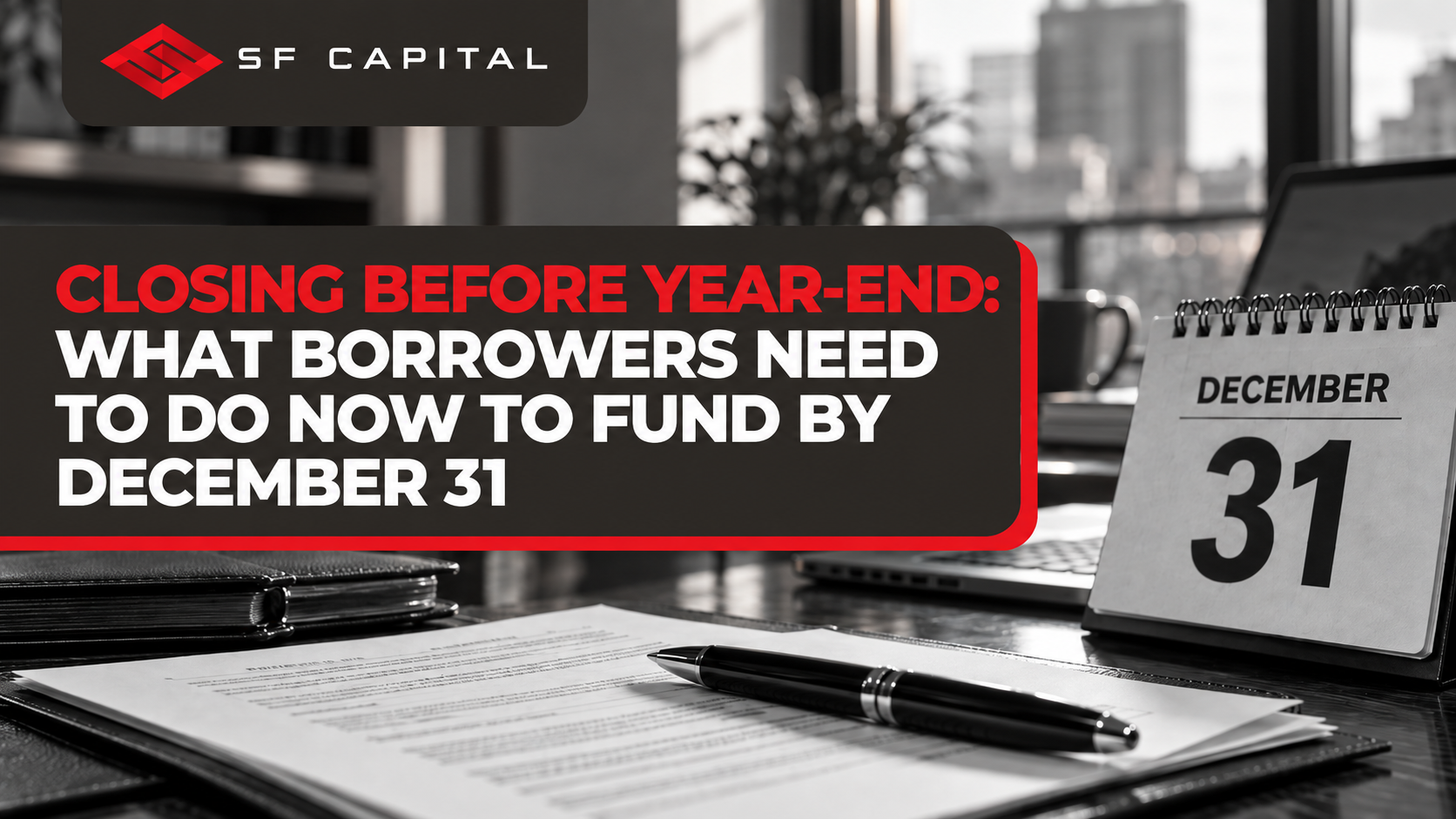
Every year, a wave of borrowers realize in mid-November that they wanted to close before December 31 and discover the calendar no longer supports it. The math isn't complicated, but it's unforgiving: work backward from year-end using realistic lender timelines, and October is close to the last month where starting a new financing application still leaves enough runway.
Realistic Timelines By Capital Source
Timelines vary meaningfully by lender type, and borrowers who assume every closing takes the same amount of time are the ones who end up disappointed. Balance-sheet bank closings typically run 45 to 60 days from a substantially complete application to funding. CMBS executions generally run 60 to 75 days, reflecting the additional securitization diligence built into that process. Agency multifamily debt through Fannie Mae or Freddie Mac typically runs 60 to 90 days. None of those windows include the time it takes to get from a first conversation to a substantially complete application in the first place, which itself commonly takes several weeks.
Why the Last Two Weeks of the Year Don't Count
The calendar looks longer than it actually is. Holiday schedules, year-end staffing gaps at title companies and appraisal firms, and lenders closing their books for the year effectively compress the usable closing window to the first three weeks of December at the latest. A deal that's "on track" in late November with a few outstanding items can easily slide into January once those last two weeks are accounted for. Building a plan around the full 90 days on the calendar rather than the roughly 75 usable business days is one of the most common scheduling mistakes borrowers make.
What a Lender-Ready File Actually Requires
Two to three years of financial statements and tax returns, assembled and organized before the first lender conversation, not requested and gathered mid-process.
A current, accurate rent roll with lease abstracts for any tenant representing a meaningful share of income.
Entity and organizational documents, including formation documents, operating agreements, a clear ownership chart, and good standing certificates for every entity in the structure.
Third-party reports ordered early. Appraisal, environmental, and engineering reports all sit on their own timelines that the borrower can't accelerate once ordered, so ordering them as soon as a lender is selected, rather than waiting for full loan approval, meaningfully shortens the overall timeline.
A realistic answer on any known issue. Deferred maintenance, a pending lease expiration, or an outstanding legal matter disclosed upfront moves faster through underwriting than the same issue discovered mid-process.
What to Do If You're Already Behind
For a borrower starting this conversation in late October or November with a hard December 31 deadline, a bank closing is the most realistic path given its shorter timeline, assuming the asset and sponsor profile fit bank underwriting. Bridge financing is the other realistic option for a deal that needs to close quickly regardless of structure, with the understanding that it's a shorter-term, more expensive solution meant to be refinanced into permanent debt once that timeline allows. What doesn't work is assuming a 90-day CMBS or agency process can be compressed into 45 days through urgency alone. Lender committees, third-party report providers, and title companies operate on their own calendars that don't move faster just because a borrower needs them to.
How SF Capital Can Help
SF Capital helps borrowers build a lender-ready file and matches deals to the capital source with a realistic path to closing on the borrower's actual timeline, rather than the one they'd prefer. If you have a financing need you're hoping to close before year-end, the time to start is now. Contact the SF Capital team.
